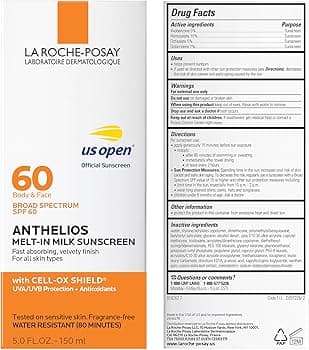
Anthelios Melt-in Milk Sunscreen SPF 60
La Roche-Posay
Key Benefits
- Provides broad-spectrum protection against UVA and UVB rays
- Helps prevent sunburn and photoaging
- Lightweight, fast-absorbing texture suitable for daily use
Apply generously to all exposed skin 15 minutes before sun exposure. Reapply every 2 hours, or after swimming, sweating, or towel drying. Suitable for daily use on face and body. Not recommended for those with sensitivity to chemical sunscreens. Use alongside other sun protection measures such as protective clothing and seeking shade.
Protect Your Skin Against Hidden Toxins & Chemicals Forever
Check ingredients of any lipstick, deodorant, moisturizer and other cosmetics to check for hormone disruptors, skin damaging chemicals & allergens while you're shopping with SkinCosmo.
Detailed Product Scores
Weighted average of all factors
Allergen and irritation risk assessment
Expected performance and results
Ingredient synergy and stability
Environmental and ethical impact
Benefits & Concerns
Key Benefits (3)
- Provides broad-spectrum protection against UVA and UVB rays
- Helps prevent sunburn and photoaging
- Lightweight, fast-absorbing texture suitable for daily use
Concerns & Limitations (4)
- Contains chemical UV filters (avobenzone, homosalate, octisalate, octocrylene) which may cause irritation in sensitive skin
- Potential for photoinstability if not properly stabilized (avobenzone)
- Octocrylene and homosalate have raised environmental and health concerns in some regions
- May not be suitable for individuals with known allergies to chemical sunscreens
Complete Ingredient Analysis
Total Ingredients
Emollients
Fragrances
Unsafe
Complete Ingredient Breakdown
Listed in order of concentration with detailed analysis
Product Attributes
Usage Instructions & Guidelines
Official Usage Instructions
Manufacturer's recommended application
Apply generously and evenly to face and body 15 minutes before sun exposure. Reapply at least every 2 hours, and after swimming, sweating, or towel drying.
Ideal For:
- •Daily skincare routine
- •Sensitive skin types
- •Natural product enthusiasts
Avoid If You Have:
- •Known allergies to listed ingredients
- •Very sensitive or reactive skin
- •Strict vegan lifestyle requirements
- •Preference for fragranced products
Skin Type Compatibility
How well this product works for different skin types
The melt-in milk texture may provide some hydration, but the formula lacks dedicated moisturizing ingredients. Chemical filters can sometimes be mildly drying.
Contains chemical filters that are generally lightweight, but may leave a slight film or shine on oily skin. No oil-control or mattifying properties.
Chemical UV filters like avobenzone and octocrylene can be irritating or sensitizing for sensitive skin. No specific soothing or anti-irritant ingredients.
Balanced formula suitable for most areas, but may not address dryness or oiliness in specific zones. No targeted attributes for combination skin.
Chemical filters are generally non-comedogenic, but some (like octocrylene) may cause breakouts in very acne-prone individuals. No anti-acne or pore-minimizing ingredients.
Well-suited for normal skin, offering high SPF protection with a cosmetically elegant texture. Minimal risk of irritation or imbalance for this skin type.
Seasonal Usage Recommendations
How to use this product throughout the year
Winter
Apply sunscreen as usual, focusing on exposed areas like the face and hands. Pair with a rich moisturizer to combat dryness from cold air and indoor heating. Reapply if outdoors for extended periods, especially during snow activities.
Spring
Continue regular application, as UV exposure increases. Use after allergy medications or treatments to avoid irritation. Adjust amount if spending more time outdoors and consider layering with a lightweight moisturizer for changing humidity.
Summer
Apply generously to all exposed skin, reapplying every 2 hours and after swimming or sweating. Opt for lightweight, non-comedogenic moisturizers underneath if needed. Pay extra attention to high-exposure areas during outdoor activities.
Fall
Maintain daily use, especially during outdoor activities. As temperatures drop and wind increases, consider using a hydrating moisturizer underneath to prevent dryness. Prepare for winter by maintaining consistent sunscreen habits.
Enhanced Usage Instructions
Detailed usage guidance for different skin concerns and best practices
Usage by Skin Concern
Dry Skin
Before applying Anthelios Melt-in Milk Sunscreen SPF 60, use a hydrating moisturizer to prevent dryness or tightness, as chemical sunscreens can sometimes exacerbate dryness. Reapply sunscreen every 2 hours, and after swimming or sweating. Consider layering with a hydrating mist throughout the day if skin feels dry.
Oily Skin
Cleanse skin thoroughly before application to reduce excess oil. Apply a lightweight, oil-free moisturizer if needed, then follow with the sunscreen. Use blotting papers as needed throughout the day, but do not wipe off the sunscreen. Reapply every 2 hours, especially if skin becomes oily or after sweating.
Sensitive Skin
Patch test the sunscreen on a small area (such as behind the ear) for 24 hours before full use, as chemical filters can sometimes irritate sensitive skin. Avoid applying to broken or irritated skin. If stinging or redness occurs, discontinue use and consult a dermatologist. Apply a gentle, fragrance-free moisturizer before sunscreen to minimize irritation.
Combination Skin
Apply a lightweight moisturizer to dry areas before sunscreen. For oilier areas (like the T-zone), ensure skin is clean and consider using a mattifying primer before sunscreen. Reapply every 2 hours, focusing on areas prone to sun exposure.
Acne-Prone Skin
Cleanse skin with a gentle, non-comedogenic cleanser before application. Use a non-comedogenic moisturizer if needed. Apply sunscreen evenly and avoid rubbing vigorously. Remove sunscreen thoroughly at night with a gentle cleanser to prevent pore clogging. Monitor for breakouts; if irritation or acne worsens, consult a dermatologist.
Usage Tips & Best Practices
Daily Use
Apply every morning as the last step of your skincare routine, 15 minutes before sun exposure. Reapply every 2 hours when outdoors, and immediately after swimming, sweating, or towel drying. Use daily, even on cloudy days or when indoors near windows.
Night Use
Sunscreen is not needed at night. Thoroughly cleanse skin to remove all sunscreen before applying nighttime skincare products.
Frequency
Apply every morning and reapply at least every 2 hours during sun exposure, and immediately after swimming, sweating, or towel drying.
Amount
For the face and neck, use approximately a nickel-sized amount (about 1/3 to 1/2 teaspoon). For the body, use about 1 ounce (a shot glass full) for full coverage. Apply generously and evenly.
Best Time
Apply 15 minutes before sun exposure, ideally as the final step in your morning skincare routine. Reapply every 2 hours when outdoors.
Product Alternatives
Top-Rated sunscreen Alternatives


Popular sunscreen Alternatives