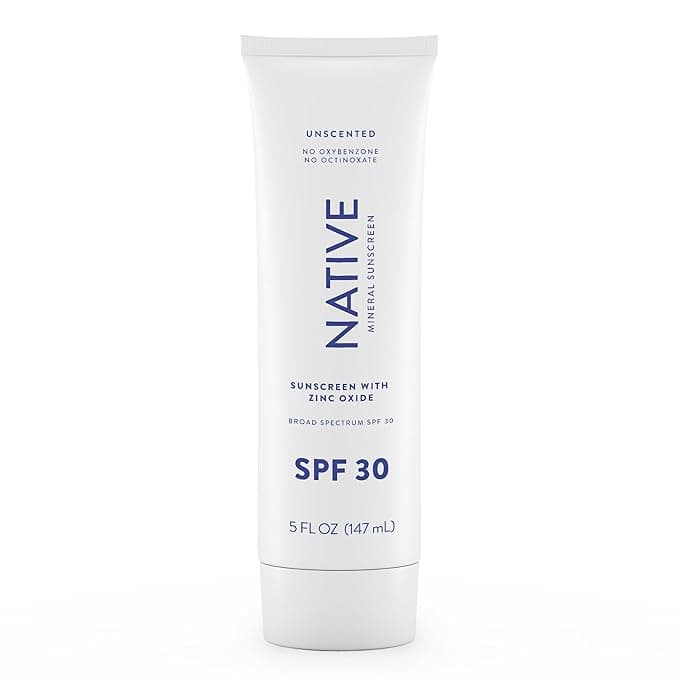
Native Sunscreen SPF 30
Native
Key Benefits
- Broad-spectrum UV protection (SPF 30, zinc oxide)
- Suitable for sensitive skin (minimal irritants, fragrance-free)
- Moisturizing and skin barrier support (glycerin, cetearyl alcohol, sunflower oil)
This mineral sunscreen offers effective broad-spectrum protection with zinc oxide and is generally suitable for sensitive skin due to its fragrance-free and minimal-irritant formula. However, individuals with allergies to coconut, sunflower, or fatty alcohols, or those with a history of reactions to benzyl alcohol, should exercise caution. Not recommended for those with fungal acne or very oily skin due to the presence of oils and esters. Always patch test before full application. Safe for daily use and for those seeking a reef-safe, vegan, and cruelty-free option.
Protect Your Skin Against Hidden Toxins & Chemicals Forever
Check ingredients of any lipstick, deodorant, moisturizer and other cosmetics to check for hormone disruptors, skin damaging chemicals & allergens while you're shopping with SkinCosmo.
Detailed Product Scores
Weighted average of all factors
Allergen and irritation risk assessment
Expected performance and results
Ingredient synergy and stability
Environmental and ethical impact
Benefits & Concerns
Key Benefits (3)
- Broad-spectrum UV protection (SPF 30, zinc oxide)
- Suitable for sensitive skin (minimal irritants, fragrance-free)
- Moisturizing and skin barrier support (glycerin, cetearyl alcohol, sunflower oil)
Concerns & Limitations (6)
- Benzyl alcohol: potential irritant and allergen, especially for sensitive skin or those with eczema/rosacea
- Cetearyl alcohol, arachidyl alcohol, behenyl alcohol: rare but possible allergens (fatty alcohols); may cause issues in highly sensitive individuals
- Helianthus annuus (sunflower) seed oil: rare allergen, especially in those with seed allergies
- Coconut alkanes, coco-glucoside, coco-caprylate/caprate: derived from coconut, possible concern for those with coconut allergy
- Not oil-free: contains sunflower oil and other emollients, may not be suitable for very oily or acne-prone skin
- Not fungal-acne-safe: contains esters and oils that may feed Malassezia (fungal acne)
Complete Ingredient Analysis
Total Ingredients
Emollients
Fragrances
Unsafe
Complete Ingredient Breakdown
Listed in order of concentration with detailed analysis
Product Attributes
Usage Instructions & Guidelines
Official Usage Instructions
Manufacturer's recommended application
Apply daily, reapply every 2 hours, use with other sun protection measures.
Ideal For:
- •Daily skincare routine
- •Sensitive skin types
- •Natural product enthusiasts
Avoid If You Have:
- •Known allergies to listed ingredients
- •Very sensitive or reactive skin
- •Preference for fragranced products
Skin Type Compatibility
How well this product works for different skin types
Contains emollients (caprylic/capric triglyceride, cetearyl alcohol, behenyl alcohol) and glycerin for hydration, which benefit dry skin. However, as a mineral sunscreen, it may leave a slight residue or feel less moisturizing than richer creams.
Contains multiple emollients and fatty alcohols, which may feel heavy or occlusive on oily skin and potentially contribute to shine. Not labeled as oil-free.
Zinc oxide is soothing and non-irritating for most sensitive skin. Formula appears free of fragrance and common irritants, but fatty alcohols can rarely cause issues for very sensitive individuals.
Hydrating ingredients support dry areas, but richness of formula may be too much for oily zones. May require blotting or powder in T-zone.
Contains several emollients and fatty alcohols (cetearyl, behenyl, arachidyl), which can be comedogenic for some. Not specifically non-comedogenic or oil-free, so caution advised.
Balanced hydration and gentle mineral UV protection make it suitable for normal skin, with minimal risk of irritation or dryness.
Seasonal Usage Recommendations
How to use this product throughout the year
Winter
Apply as usual, but consider layering with a richer moisturizer underneath to combat dryness from cold air and indoor heating. Ensure full coverage, especially on exposed areas prone to windburn.
Spring
Continue daily use, paying attention to reapplication during outdoor activities as UV levels rise. If experiencing allergies or sensitive skin, patch test to ensure no irritation from increased pollen exposure.
Summer
Apply generously and reapply every 2 hours, especially during outdoor activities, swimming, or sweating. Use alongside hats, sunglasses, and protective clothing for optimal sun protection.
Fall
Maintain daily application as UV exposure remains significant. As temperatures drop and winds increase, monitor skin for dryness and consider pairing with a hydrating moisturizer to prepare for winter conditions.
Enhanced Usage Instructions
Detailed usage guidance for different skin concerns and best practices
Usage by Skin Concern
Dry Skin
Before applying Native Sunscreen SPF 30, use a hydrating moisturizer to lock in moisture, as zinc oxide can be slightly drying. Reapply every 2 hours when exposed to sunlight. Consider layering with a hydrating serum if your skin feels tight.
Oily Skin
Cleanse skin thoroughly before application to remove excess oil. Use a lightweight, oil-free moisturizer if needed. Apply sunscreen as the final step in your morning routine. Blot skin with oil-absorbing sheets before reapplication if skin becomes shiny.
Sensitive Skin
Patch test the sunscreen on a small area before full-face application. The mineral formula is generally well-tolerated, but avoid applying to broken or irritated skin. Reapply gently, and avoid rubbing vigorously.
Combination Skin
Apply a lightweight moisturizer to dry areas before sunscreen. Use sunscreen alone on oilier zones. Reapply every 2 hours, focusing on areas that tend to lose product faster (nose, forehead).
Acne-Prone Skin
Cleanse thoroughly before application. The non-comedogenic formula is suitable, but avoid layering with heavy creams. Reapply every 2 hours, especially after sweating. Remove sunscreen completely at night to prevent pore congestion.
Usage Tips & Best Practices
Daily Use
Apply generously to all exposed skin 15 minutes before sun exposure, as the last step in your morning skincare routine. Reapply every 2 hours, or after swimming, sweating, or towel drying.
Night Use
Sunscreen is not necessary at night. Cleanse thoroughly to remove all sunscreen residues before bedtime to prevent buildup and potential irritation.
Frequency
Use every morning and reapply every 2 hours when outdoors or exposed to sunlight. Reapply after swimming, sweating, or towel drying.
Amount
Use approximately a nickel-sized amount (about 1/3 to 1/2 teaspoon) for the face and neck. For the body, use about 1 ounce (a shot glass) for full coverage.
Best Time
Apply 15 minutes before sun exposure, ideally as the last step in your morning skincare routine. Reapply every 2 hours while outdoors.
Product Alternatives
Best sunscreen Alternatives


Top-Rated sunscreen Alternatives
Popular sunscreen Alternatives