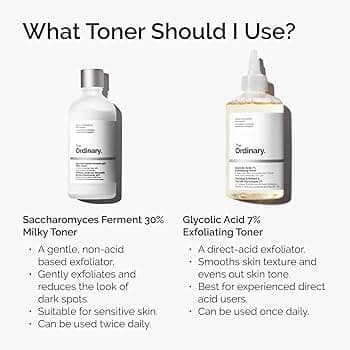
Glycolic Acid 7% Toning Solution
The Ordinary
Apply once daily in the evening to clean, dry skin using a cotton pad. Avoid the eye contour and contact with eyes. Do not use on sensitive, peeling, or compromised skin. Start with 2-3 times per week if you have not used acids before, gradually increasing frequency as tolerated. Always use broad-spectrum sunscreen during the day while using this product and for at least one week after discontinuation. Patch test before first use. Not recommended for sensitive or reactive skin types.
Protect Your Skin Against Hidden Toxins & Chemicals Forever
Check ingredients of any lipstick, deodorant, moisturizer and other cosmetics to check for hormone disruptors, skin damaging chemicals & allergens while you're shopping with SkinCosmo.
Detailed Product Scores
Weighted average of all factors
Allergen and irritation risk assessment
Expected performance and results
Ingredient synergy and stability
Environmental and ethical impact
Benefits & Concerns
Concerns & Limitations (6)
- Contains glycolic acid, which may cause irritation, redness, or stinging, especially for sensitive skin.
- Contains hexyl nicotinate, which may cause temporary flushing or tingling.
- Contains multiple botanical extracts (e.g., Rosa damascena flower water, Panax ginseng root extract) that may cause allergic reactions in sensitive individuals.
- Not suitable for use on compromised or broken skin.
- May increase photosensitivity due to glycolic acid.
- Contains humectants (glycerin, sodium PCA, urea, etc.) that may draw moisture from deeper skin layers if used in very dry environments.
Complete Ingredient Analysis
Total Ingredients
Emollients
Fragrances
Unsafe
Complete Ingredient Breakdown
Listed in order of concentration with detailed analysis
Product Attributes
Usage Instructions & Guidelines
Official Usage Instructions
Manufacturer's recommended application
Ideal For:
- •Daily skincare routine
- •Sensitive skin types
- •Natural product enthusiasts
Avoid If You Have:
- •Known allergies to listed ingredients
- •Very sensitive or reactive skin
- •Strict vegan lifestyle requirements
- •Preference for fragranced products
Skin Type Compatibility
How well this product works for different skin types
The 7% glycolic acid concentration can exacerbate dryness and irritation, despite the presence of some hydrating ingredients. Not ideal for already dry skin.
Glycolic acid helps exfoliate and reduce excess oil, making it more suitable for oily skin, but potential for irritation remains due to high acid concentration.
High glycolic acid concentration and presence of floral waters increase risk of irritation and allergic reactions; not recommended for sensitive skin.
May help with oilier areas but could cause dryness or irritation on drier zones; use with caution and patch test first.
Glycolic acid can help with exfoliation and clogged pores, but risk of irritation and potential for over-exfoliation should be considered.
Generally suitable for normal skin if introduced gradually, but the relatively high acid concentration and potential for irritation warrant caution.
Seasonal Usage Recommendations
How to use this product throughout the year
Winter
Limit use to 1-2 times per week due to increased dryness and sensitivity; follow with a rich moisturizer and avoid layering with other exfoliants.
Spring
Resume regular use (2-3 times per week) as skin tolerates; monitor for irritation if experiencing seasonal allergies or sensitivity.
Summer
Reduce frequency (1-2 times per week) to minimize photosensitivity; always apply broad-spectrum sunscreen daily and avoid use before prolonged sun exposure.
Fall
Gradually increase use (2-3 times per week) to help with post-summer skin texture and prepare for drier months; maintain hydration with a moisturizer.
Enhanced Usage Instructions
Detailed usage guidance for different skin concerns and best practices
Usage by Skin Concern
Dry Skin
Start with once weekly application to minimize irritation and dryness. After cleansing, apply a small amount (about a quarter-sized amount on a cotton pad) to the face, avoiding the eye and lip areas. Follow immediately with a hydrating serum and a rich moisturizer. Monitor for signs of excessive dryness, flaking, or irritation; if tolerated, gradually increase to twice weekly. Always use sunscreen during the day, as glycolic acid increases sun sensitivity.
Oily Skin
Begin with 2-3 times per week, preferably at night. After cleansing, sweep a moderate amount over the face using a cotton pad, focusing on oilier areas (T-zone). Follow with a lightweight, oil-free moisturizer. If well tolerated after two weeks, frequency can be increased to every other night. Always use sunscreen daily.
Sensitive Skin
Patch test before first use. If tolerated, use only once weekly at night. Apply a minimal amount (dampening a cotton pad, not soaking) and avoid areas prone to redness or irritation. Follow with a gentle, fragrance-free moisturizer. Discontinue if stinging, redness, or irritation occurs. Do not combine with other exfoliants or retinoids. Always use sunscreen during the day.
Combination Skin
Apply 1-2 times per week at night, focusing on oilier areas (forehead, nose, chin), and use less product or skip drier areas (cheeks). Use a cotton pad to apply a thin, even layer. Follow with a moisturizer suited to combination skin. Adjust frequency based on skin response, but avoid daily use initially. Use sunscreen daily.
Acne-Prone Skin
Use 2-3 times per week at night after cleansing. Apply a moderate amount with a cotton pad, focusing on breakout-prone areas. Avoid open wounds or active, inflamed lesions. Follow with a non-comedogenic moisturizer. Do not use alongside other strong exfoliants or acne treatments (like benzoyl peroxide or retinoids) on the same night. Increase frequency only if no irritation occurs. Always use sunscreen.
Usage Tips & Best Practices
Daily Use
Not recommended for daily use initially due to irritation risk. Most skin types should start with 1-3 times per week and increase only if well tolerated. Daily use may be suitable for very resilient, non-sensitive skin after a month of gradual introduction, but monitor closely for signs of over-exfoliation.
Night Use
Best used at night, as glycolic acid increases photosensitivity. Apply after cleansing and before serums/moisturizers. Do not use on nights when applying other exfoliants or retinoids.
Frequency
Start with 1-3 times per week depending on skin type and tolerance. Increase gradually if no irritation occurs. Do not exceed once daily use.
Amount
Dispense enough to dampen a cotton pad (about 2-3 mL or a quarter-sized amount). Sweep evenly over the face, avoiding eyes and lips. Do not saturate the skin.
Best Time
Evening, after cleansing and before moisturizer. Always follow with sunscreen the next morning.